
discover the best of punjab
Explore famous tourist attractions, hidden gems, iconic food spots, local markets, and cultural experiences across Punjab—all in one place.
History of Punjab
Punjab, whose name comes from the Persian words “Panj” (five) and “Aab” (water), meaning “Land of Five Rivers,” is one of the oldest inhabited regions in the world. The five rivers—Beas, Ravi, Sutlej, Chenab, and Jhelum—have made the region fertile and prosperous for thousands of years. Throughout history, Punjab has been a center of civilization, trade, culture, and spirituality.
Ancient Punjab
The history of Punjab dates back over 5,000 years to the Indus Valley Civilization (c. 3300–1300 BCE), one of the world’s earliest urban civilizations. Major cities such as Harappa flourished with advanced town planning, drainage systems, agriculture, and trade. Archaeological discoveries reveal that the people of this civilization were highly skilled in architecture, crafts, and commerce.
After the decline of the Indus Valley Civilization, the region became home to the Vedic people. During this period, the sacred Vedas were composed, and Punjab became an important center of early Indian culture and learning.
Foreign Invasions and Empires
Because of its strategic location in northwestern India, Punjab served as the gateway to the Indian subcontinent. Over the centuries, many rulers and armies entered India through Punjab.
In 326 BCE, Alexander the Great invaded Punjab and fought the famous Battle of the Hydaspes against King Porus near the Jhelum River. Although Alexander won the battle, he was impressed by King Porus’s courage and allowed him to continue ruling his kingdom.
Later, Punjab became part of the Maurya Empire under Chandragupta Maurya and reached great prosperity during the reign of Ashoka.
Over the following centuries, Punjab was ruled by several dynasties, including the Kushans, Guptas, Ghaznavids, Delhi Sultanate, and the Mughal Empire, each leaving a lasting impact on its culture, architecture, and traditions.
Rise of Sikhism
Punjab is the birthplace of Sikhism. In 1469, Guru Nanak Dev Ji was born in Nankana Sahib. He preached equality, honesty, compassion, and devotion to one God.
Nine Sikh Gurus succeeded Guru Nanak and strengthened the faith. The tenth Guru, Guru Gobind Singh Ji, founded the Khalsa in 1699 at Takht Sri Kesgarh Sahib to uphold justice, courage, and equality.
Sikh Empire
The early nineteenth century saw the rise of the powerful Sikh Empire under Maharaja Ranjit Singh. From 1801 to 1839, he united much of Punjab into a strong and prosperous kingdom.
His administration promoted religious harmony, and people of different faiths held important positions in government. During his reign, the Golden Temple was beautified with marble and gold, giving it the magnificent appearance for which it is famous today.
British Rule
After the death of Maharaja Ranjit Singh, political instability weakened the Sikh Empire. Following the First Anglo-Sikh War and the Second Anglo-Sikh War, the British annexed Punjab in 1849.
During British rule, Punjab became an important agricultural and military region. The British built canals, roads, and railways, but many Punjabis also joined the struggle for India’s independence.
Role in India’s Freedom Movement
Punjab played a vital role in India’s fight for independence. The tragic Jallianwala Bagh Massacre in Amritsar became a turning point in the freedom movement, inspiring millions of Indians to oppose British rule.
Freedom fighters from Punjab, including Bhagat Singh, Udham Singh, and Lala Lajpat Rai, made remarkable sacrifices for the nation’s independence.
Partition of Punjab (1947)
When India gained independence in 1947, Punjab was divided between India and the newly created Pakistan during the Partition of India. The partition caused one of the largest migrations in history, with millions of people moving across the new border amid widespread violence and hardship.
Today, Indian Punjab and Pakistani Punjab continue to share many cultural traditions despite being separate regions.
Modern Punjab
After independence, Punjab became one of India’s leading agricultural states during the Green Revolution of the 1960s and 1970s. The introduction of modern farming techniques greatly increased the production of wheat and rice, earning Punjab the title “The Granary of India.”
Today, Punjab is known for:
Rich Sikh heritage and historic gurdwaras
Colorful festivals such as Vaisakhi and Lohri
Traditional Bhangra and Giddha dance
Delicious Punjabi cuisine
Strong agricultural economy
Warm hospitality and vibrant culture
Punjab remains one of India’s most historically significant and culturally vibrant states, attracting millions of visitors every year to experience its heritage, spirituality, and traditions.
MOST FAMOUS PLACES OF PUNJAB
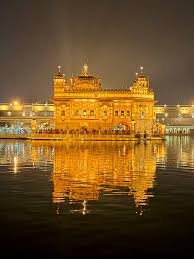
The Golden Temple, also known as Sri Harmandir Sahib, is the holiest shrine in Sikhism and one of India’s most famous landmarks. Located in Amritsar, it is renowned for its stunning gold-covered architecture, peaceful surroundings, and the sacred Amrit Sarovar (holy pool). The temple welcomes people of all religions and serves free meals every day through its community kitchen, making it a symbol of equality, service, and compassion.
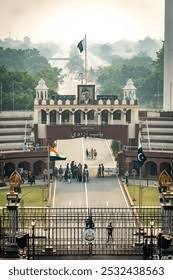
The Wagah Border is the international border crossing between India and Pakistan, located about 30 km from Amritsar. It is best known for the Beating Retreat Ceremony, a daily military parade conducted by the border forces of both countries. The ceremony, featuring synchronized marching, flag lowering, and patriotic performances, attracts thousands of visitors every evening and is one of Punjab’s most popular tourist attractions.
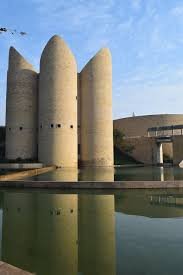
The Virasat-e-Khalsa is a world-class museum located in Anandpur Sahib, Punjab. It showcases the rich history, culture, and heritage of Sikhism through interactive exhibits, artwork, and multimedia displays. Known for its unique modern architecture, the museum offers visitors an engaging journey through over 500 years of Sikh history and is one of Punjab’s most iconic cultural attractions.